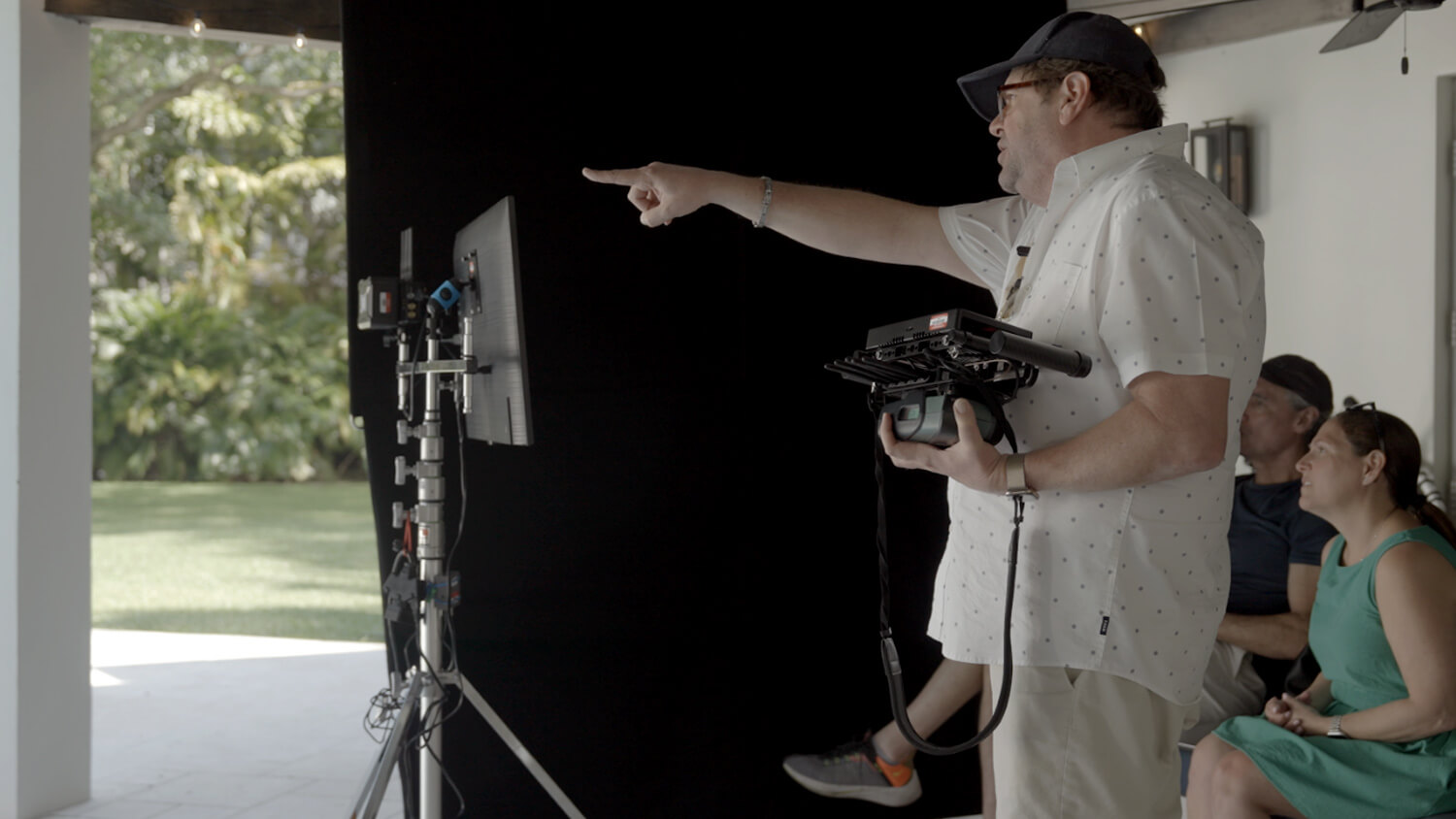
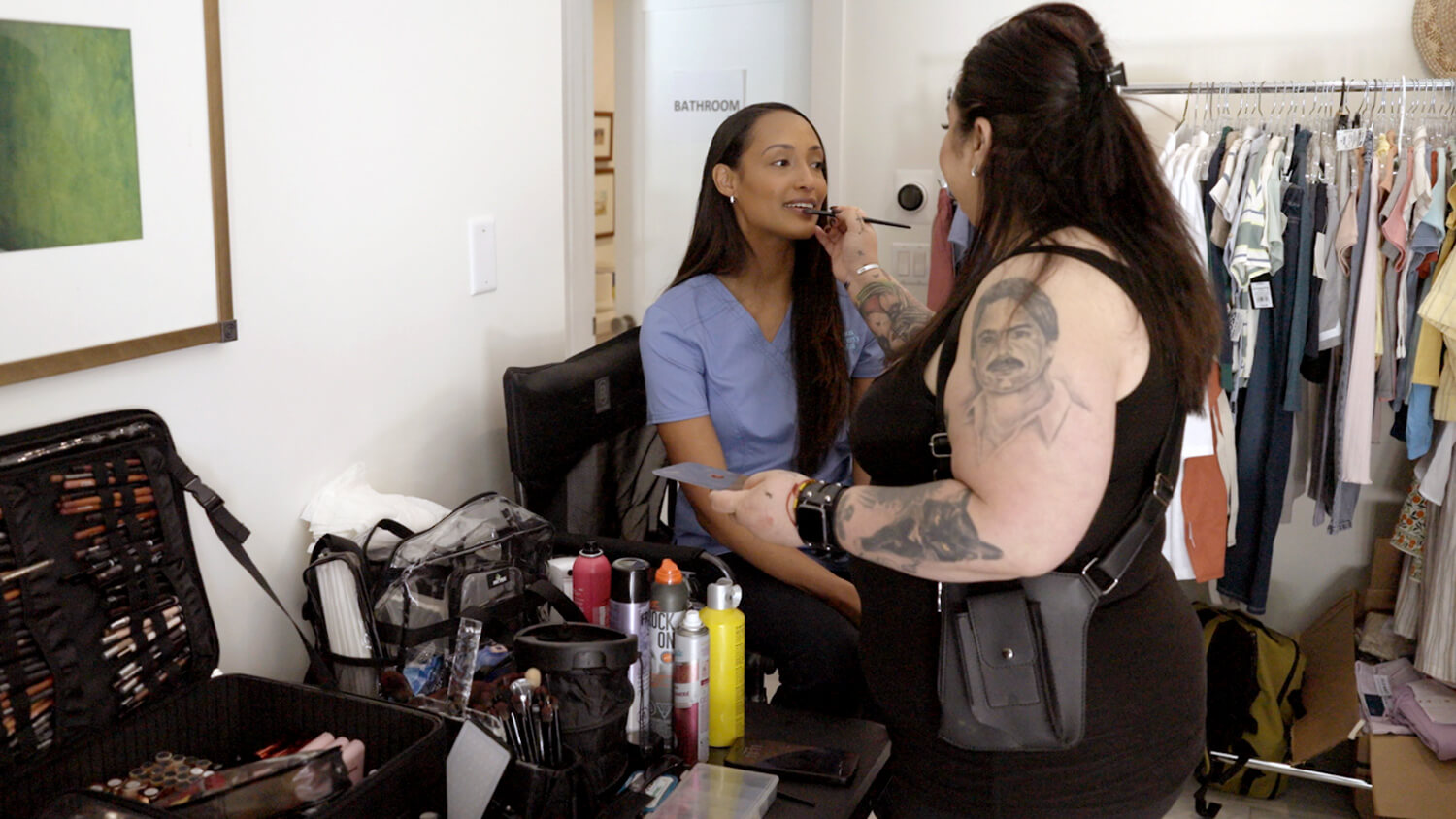
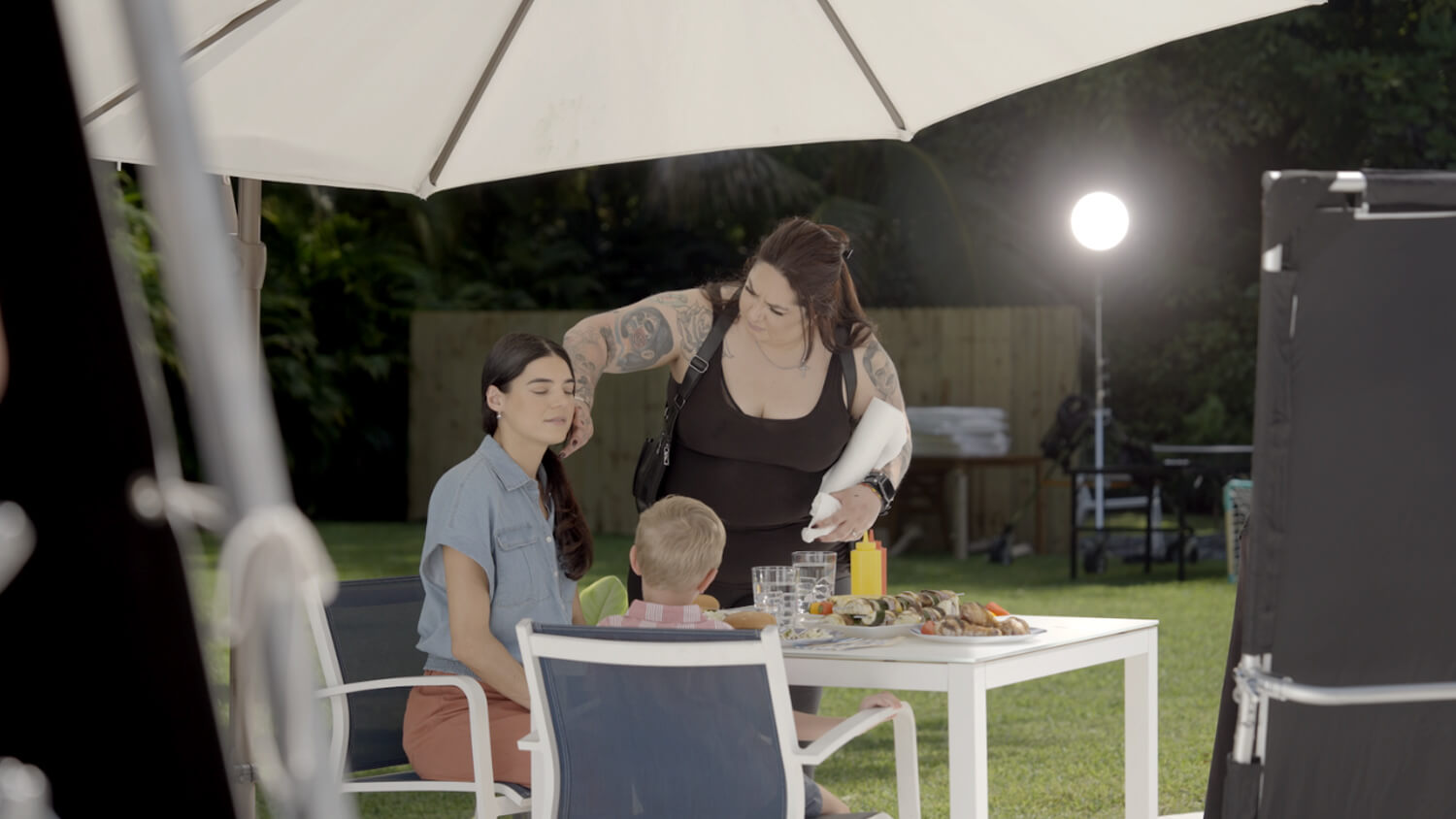
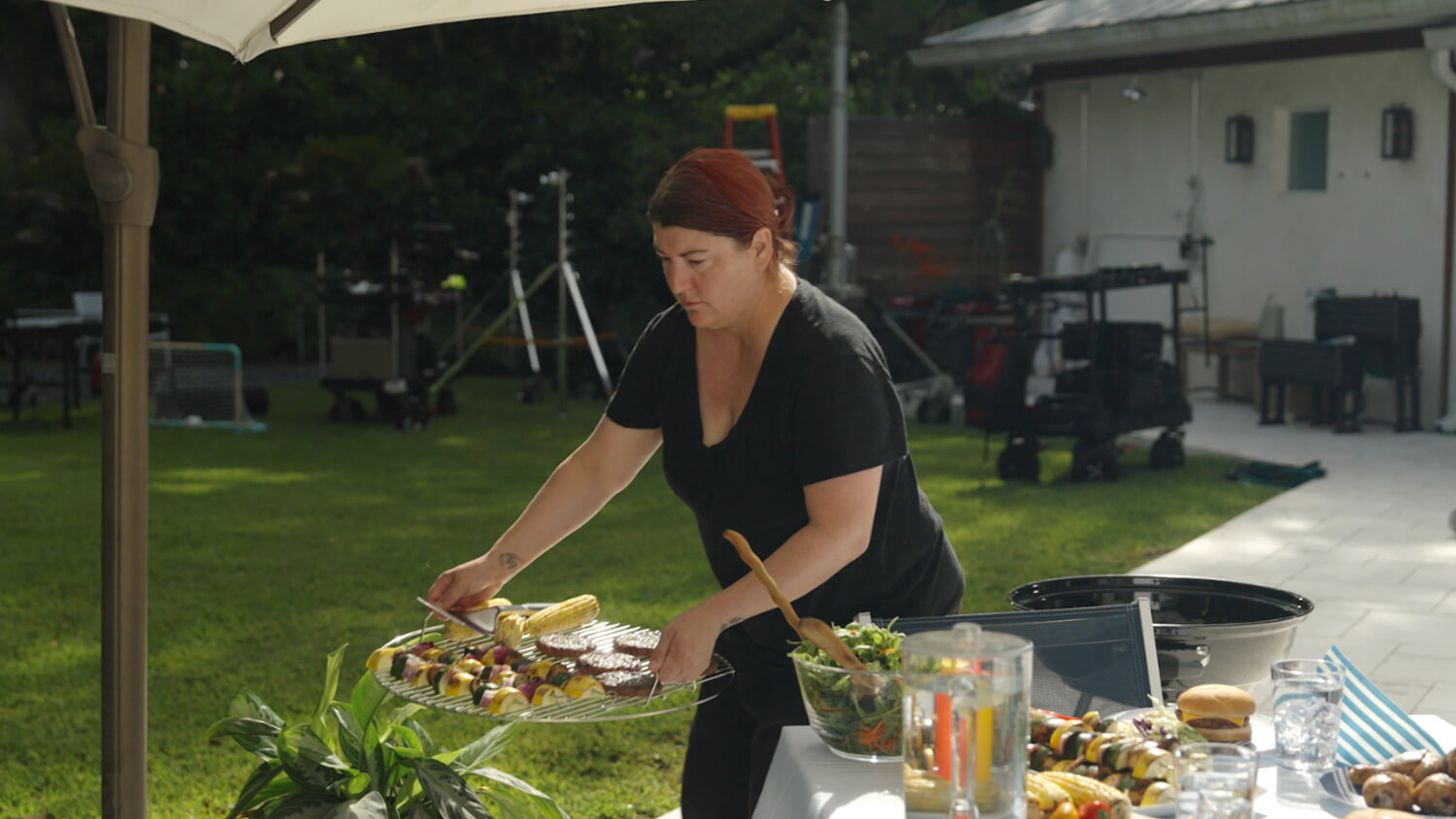
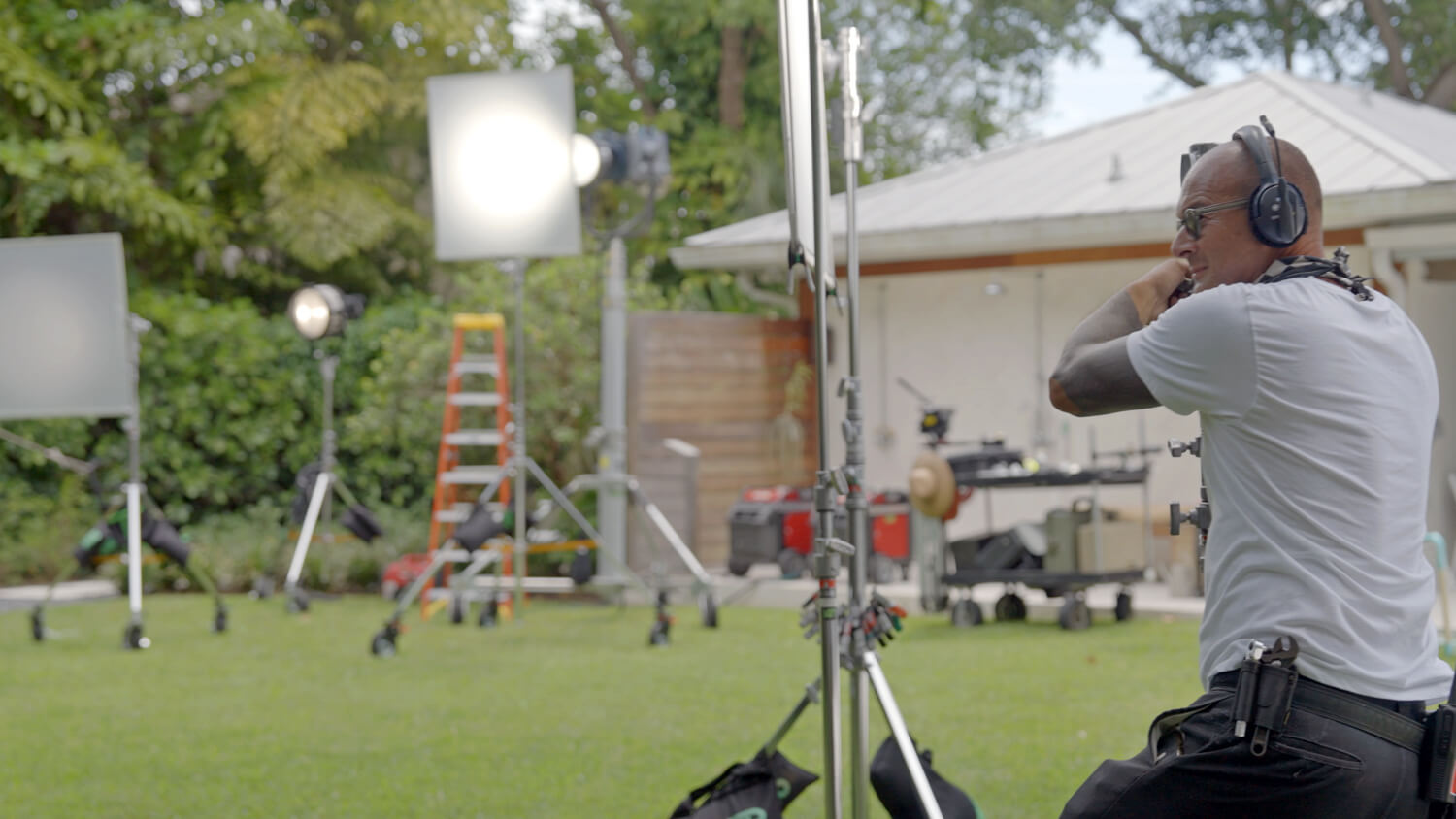
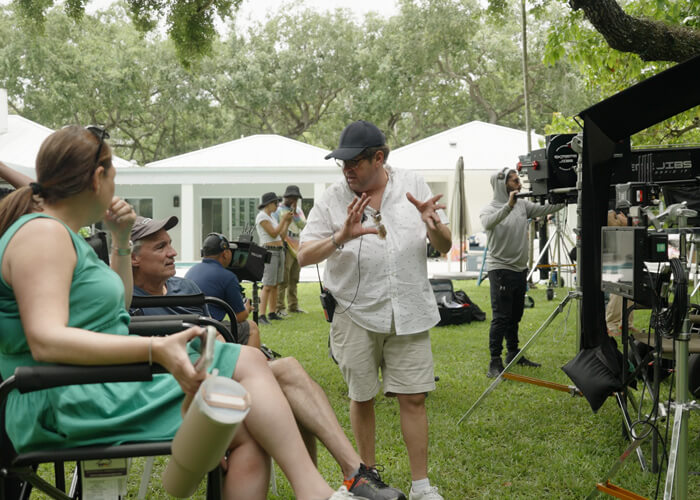
How n2 Productions made one backyard look like five — using AI visual standards, custom set builds, original music, and strategic art direction to deliver a broadcast and social campaign for Nicklaus Children's Hospital.
The creative concept was built around proximity and familiarity. The idea: world-class pediatric care is closer than you think — practically in your own backyard.
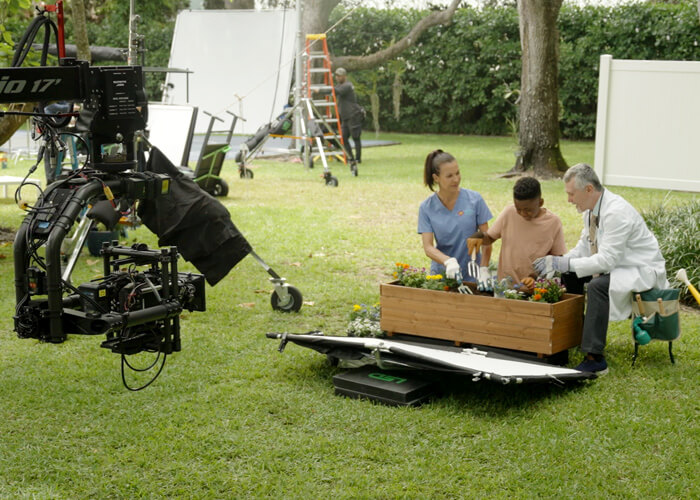
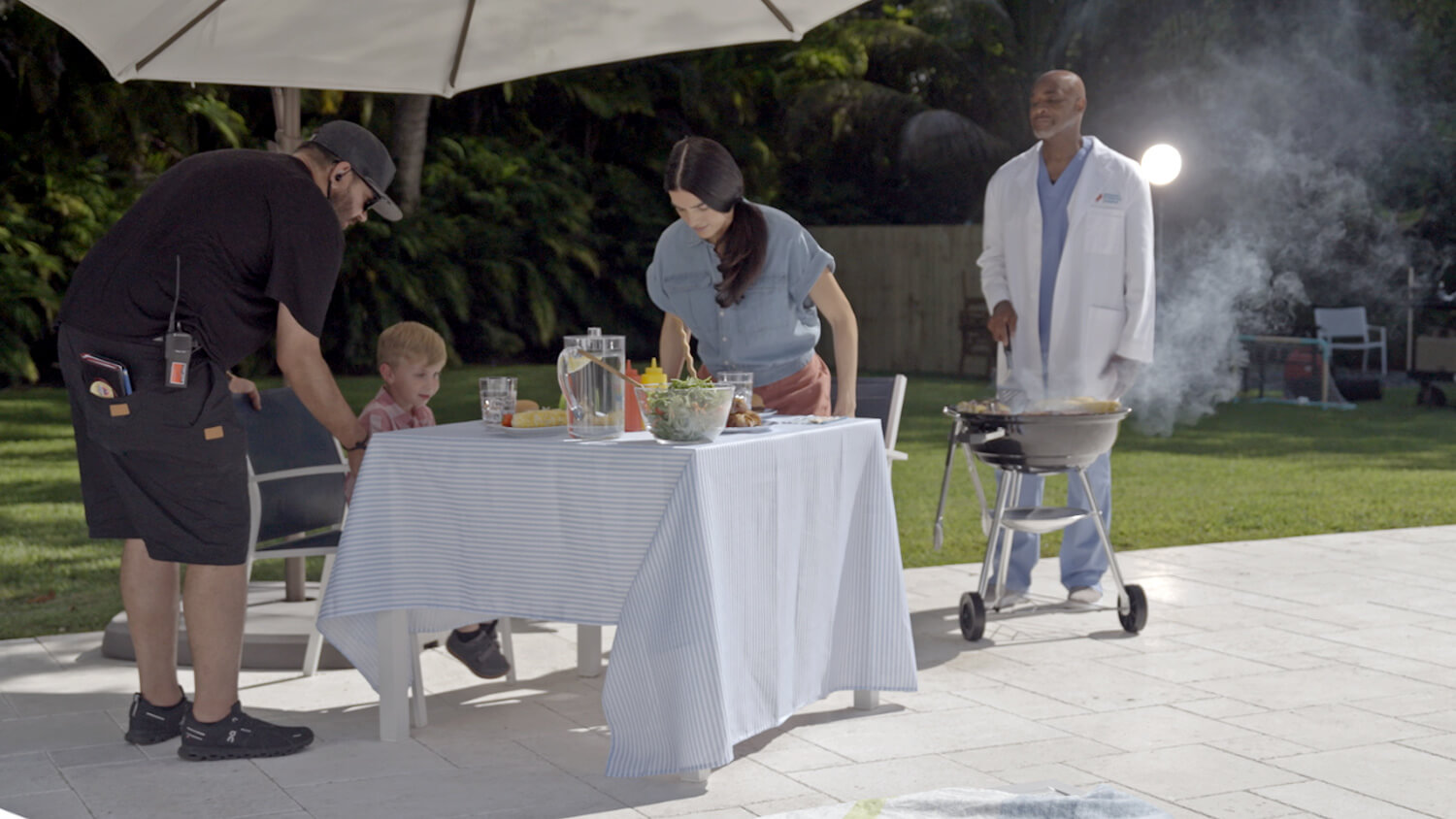
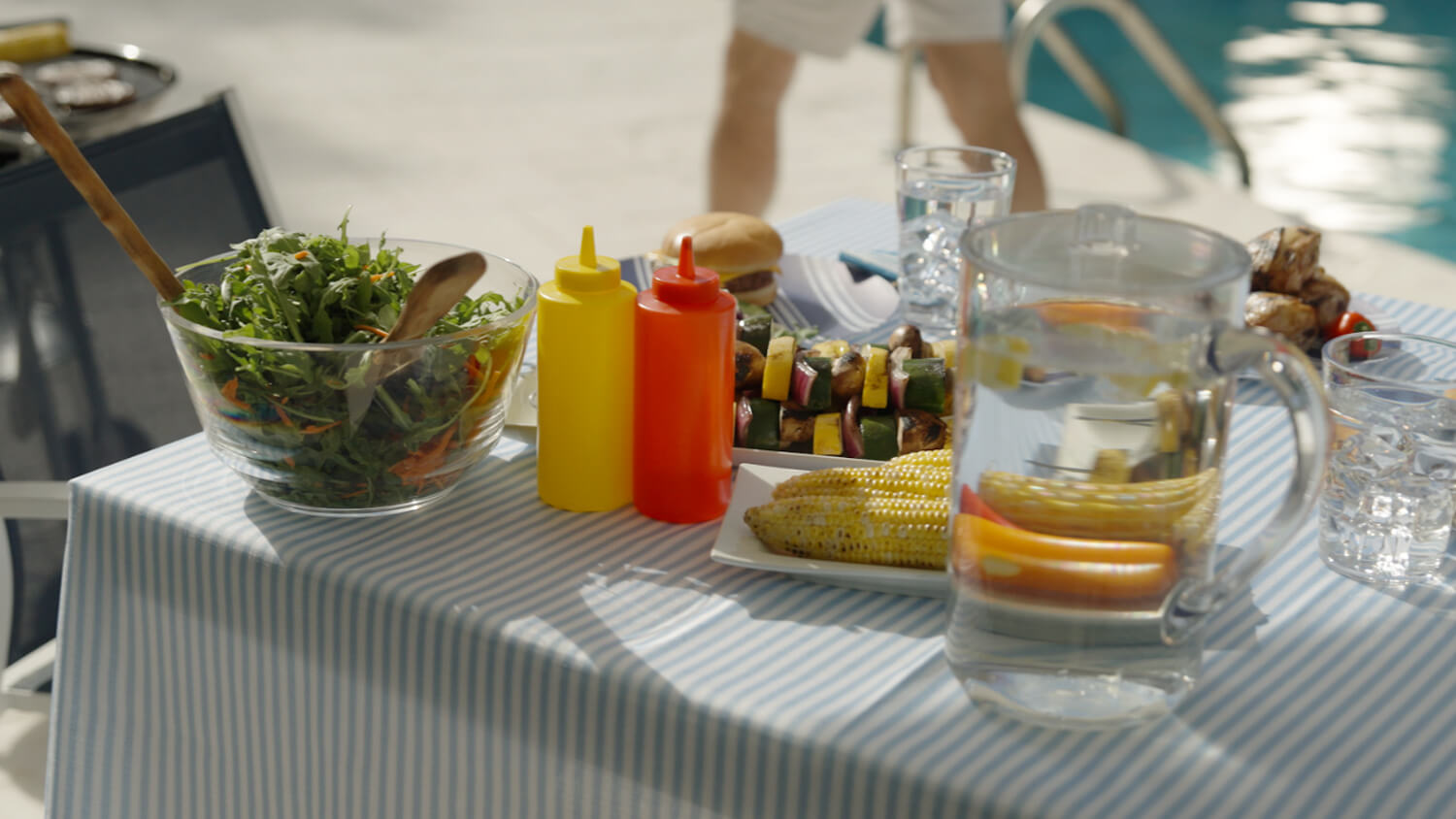
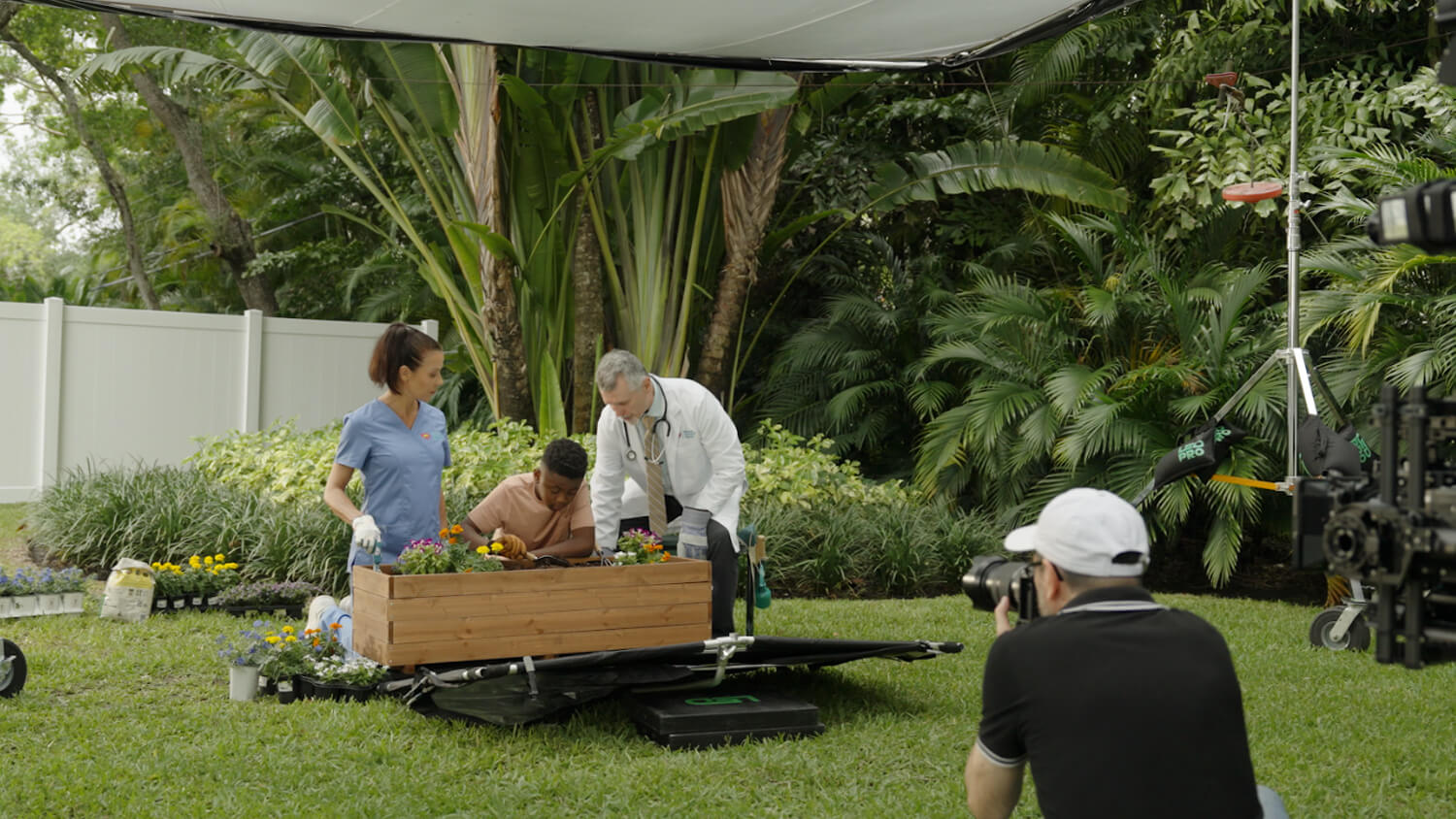
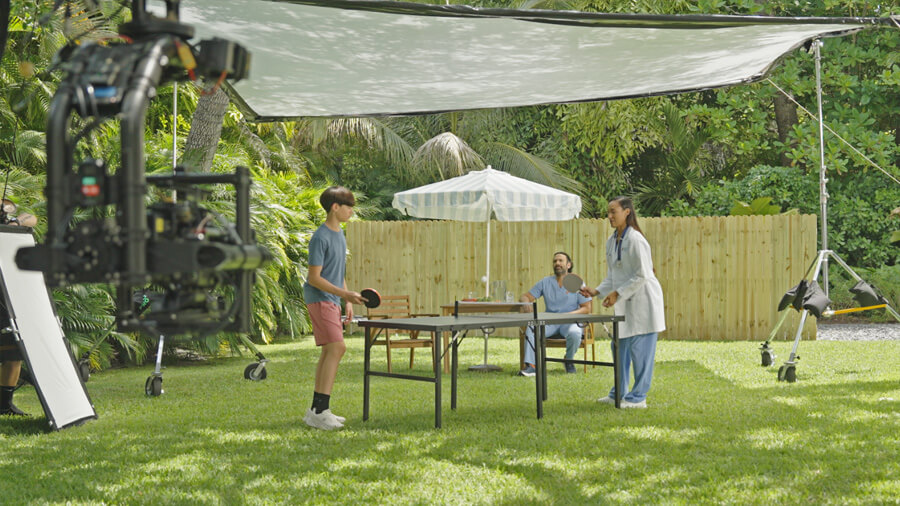
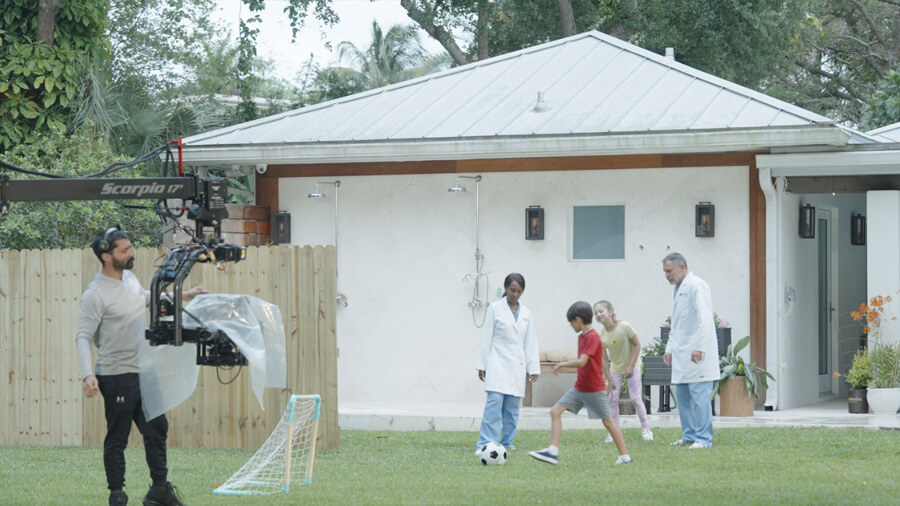
To bring that to life, the spot needed to place Nicklaus doctors and nurses inside the kinds of things that happen in a backyard — grilling, playing soccer, tending a garden, sitting in a treehouse — across five different neighborhoods. The campaign ran across broadcast, streaming, and digital channels.
The script called for exactly five distinct backyard settings — each meant to read as a different Broward County neighborhood. Early conversations with the agency made clear that maximizing every production dollar was the priority. No formal budget had been set when Neil began shaping the production approach, but it was obvious that moving cast, crew, and equipment across multiple homes and multiple days would work against that goal. A single-location solution was the right call on practical and financial grounds.
There was a second layer of complexity. Before the project reached Neil, the agency had built the entire spot in AI — using motion-based animatics derived from reference photography. The client had reviewed and approved those animatics, establishing a clear visual direction before casting or principal photography began.
Those AI animatics were never intended to appear in the final spot — they served as a client approval tool and a visual benchmark. Neil's job was to use them as a reference point for lens choice, lighting, framing, and scene composition, so that when the live production came together, it honored what the client had already said yes to.
AB&A delivered reference animatics rendered using AI image generation — stylized backyards, a consistent warm-dusk light quality, all five city names represented. The client had reviewed and approved these before production began. They were never intended to appear in the finished spot, but they established the visual direction the client had said yes to. Neil used them as the reference point for every camera and lighting decision that followed.
This shaped every pre-production decision Neil made. Scene compositions, depth of field, color temperature, and talent-to-background scale were all informed by visuals the client had already approved. Rather than working from traditional storyboards, Neil treated the animatics as a practical benchmark — a clear picture of what the finished production needed to look and feel like.
The approved look had a cinematic quality: shallow depth of field, a consistent warm light that read as late afternoon, and significant greenery in every frame. Backgrounds were never sharp — the environments were felt rather than read in detail. That became both a challenge and an advantage on location.
The animatics also served a second function beyond photography. Because they played as motion sequences, they gave Neil, the agency, and the client a shared read on timing — how long to hold on each scene, where cuts landed, and whether the rhythm of the spot felt right at 30 seconds. That editorial clarity carried into production and into the edit, where the pacing of the finished spot was already largely understood before a frame was cut.
"The AI spot looked like everything had been shot in the same backyard from different angles. Beautiful — but it told us exactly where the bar was set."
The solution to the five-location problem was a single home large enough and diverse enough to hold all five scenes without a company move. But finding that home took days. Neil conducted an exhaustive location scout — starting online, working through location databases and photo libraries, then following the strongest candidates with in-person site visits to evaluate what the photos could not show: sightlines, tree placement, spatial flow between areas, and how each part of the property read on camera.
The requirements were demanding. The backyard needed enough scale and variety to visually separate five distinct setups. It needed to feel like a neighborhood home, not an estate. And critically, it needed mature trees — large enough, with the right branch structure and canopy, to convincingly support a treehouse. That last requirement alone eliminated the majority of properties. Plenty of homes had beautiful backyards. Very few had trees with the size and character to make the treehouse scene believable.
The home ultimately selected met those requirements — and then some. The treehouse scene ended up shooting in the front yard, where mature live oaks provided the scale and canopy the backyard could not. On camera, it reads entirely as a private, wooded setting.
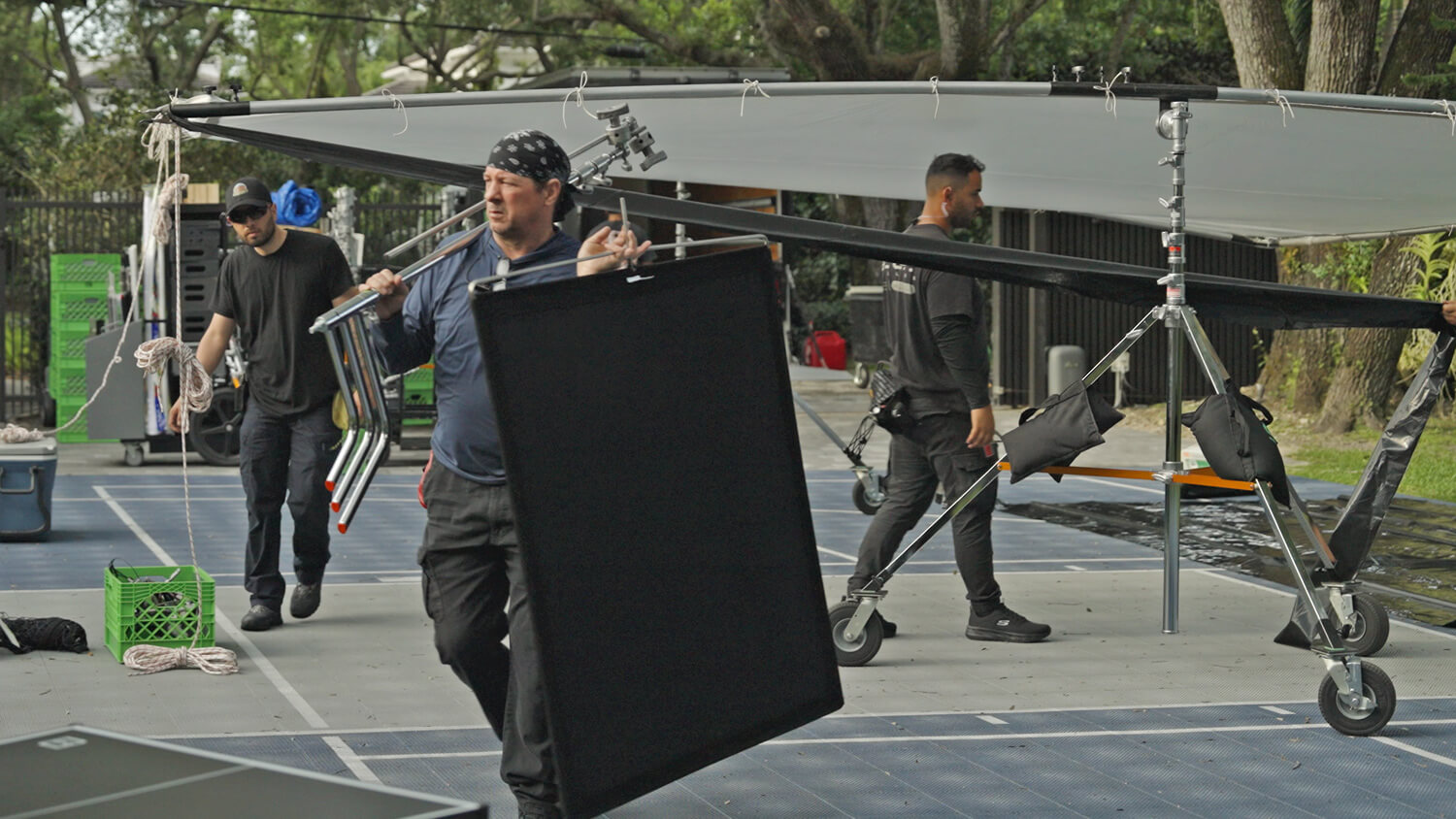
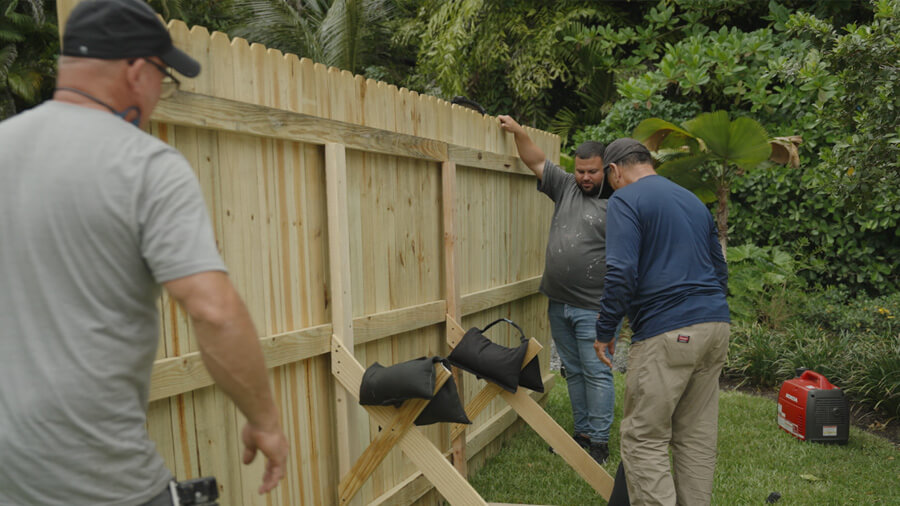
Fencing became the primary visual differentiator between neighborhoods. Each fence type carries its own regional and socioeconomic read — and none of them required breaking ground or damaging the property.
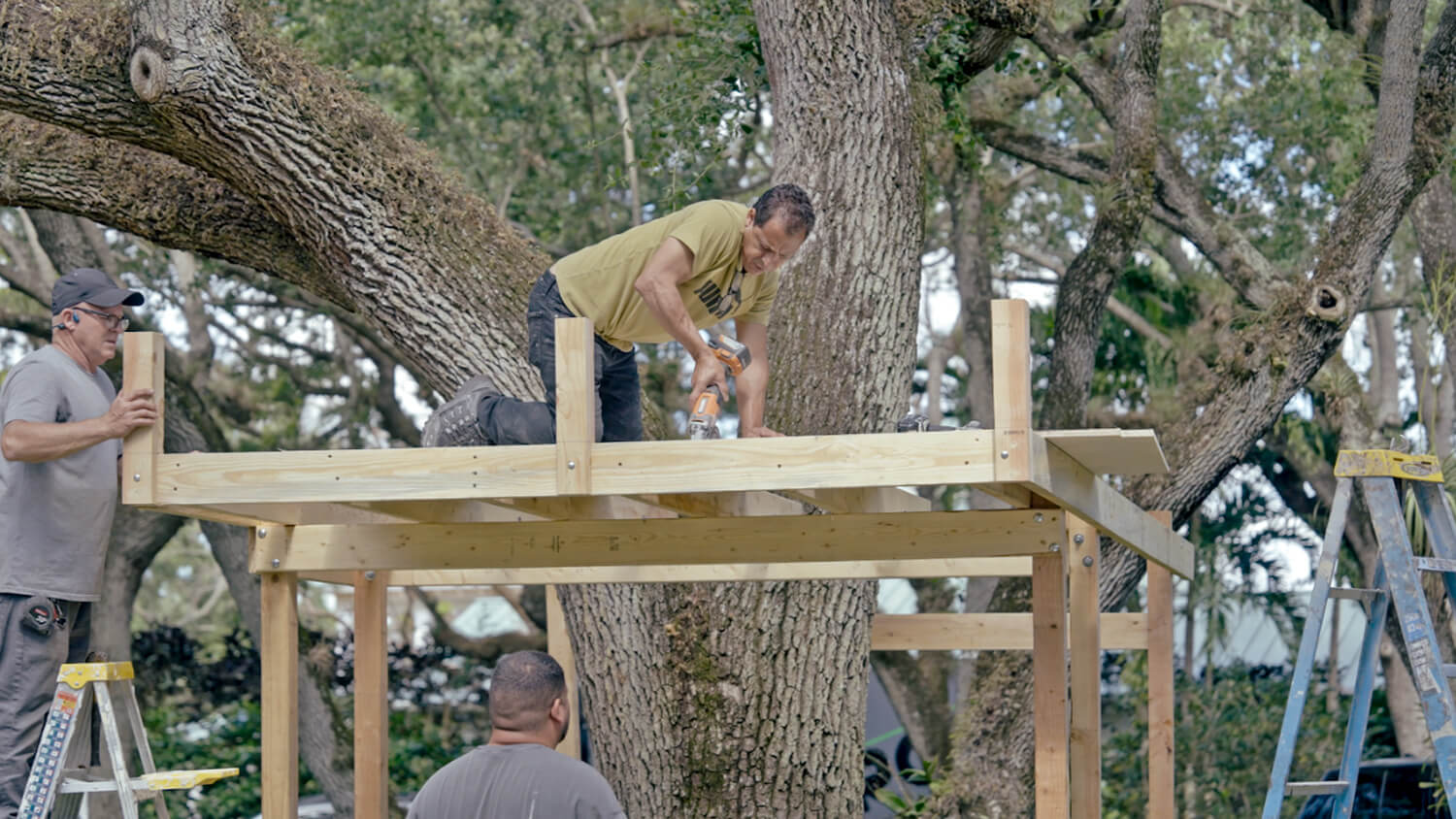
No available home in inventory had a treehouse. Properties with swing sets were passed over — a swing set frame does not offer the space or the visual weight to hold two adults and a child in a believable, comfortable moment. And a swing set does not read as "treehouse" on camera.
Neil's solution: build one.
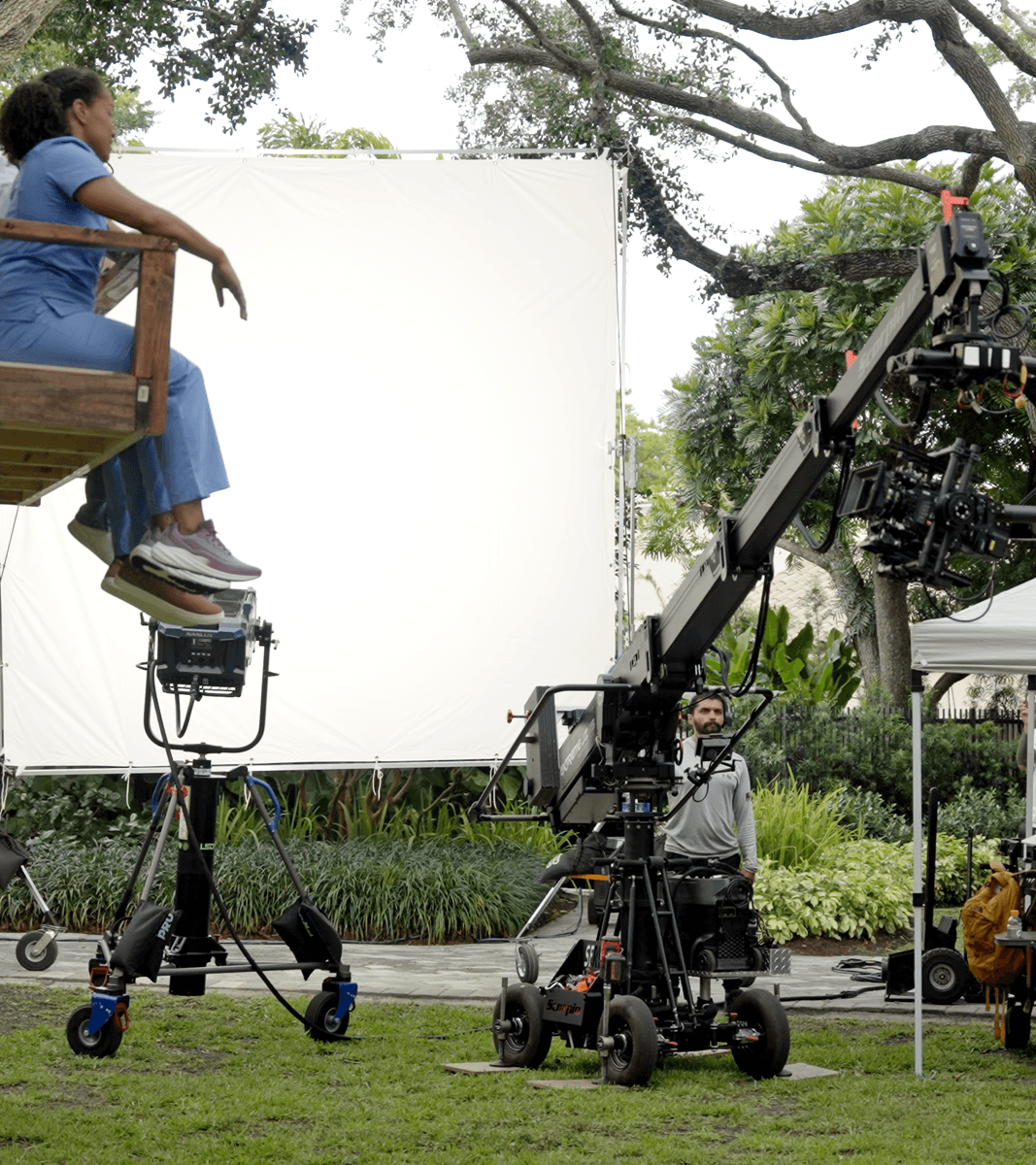
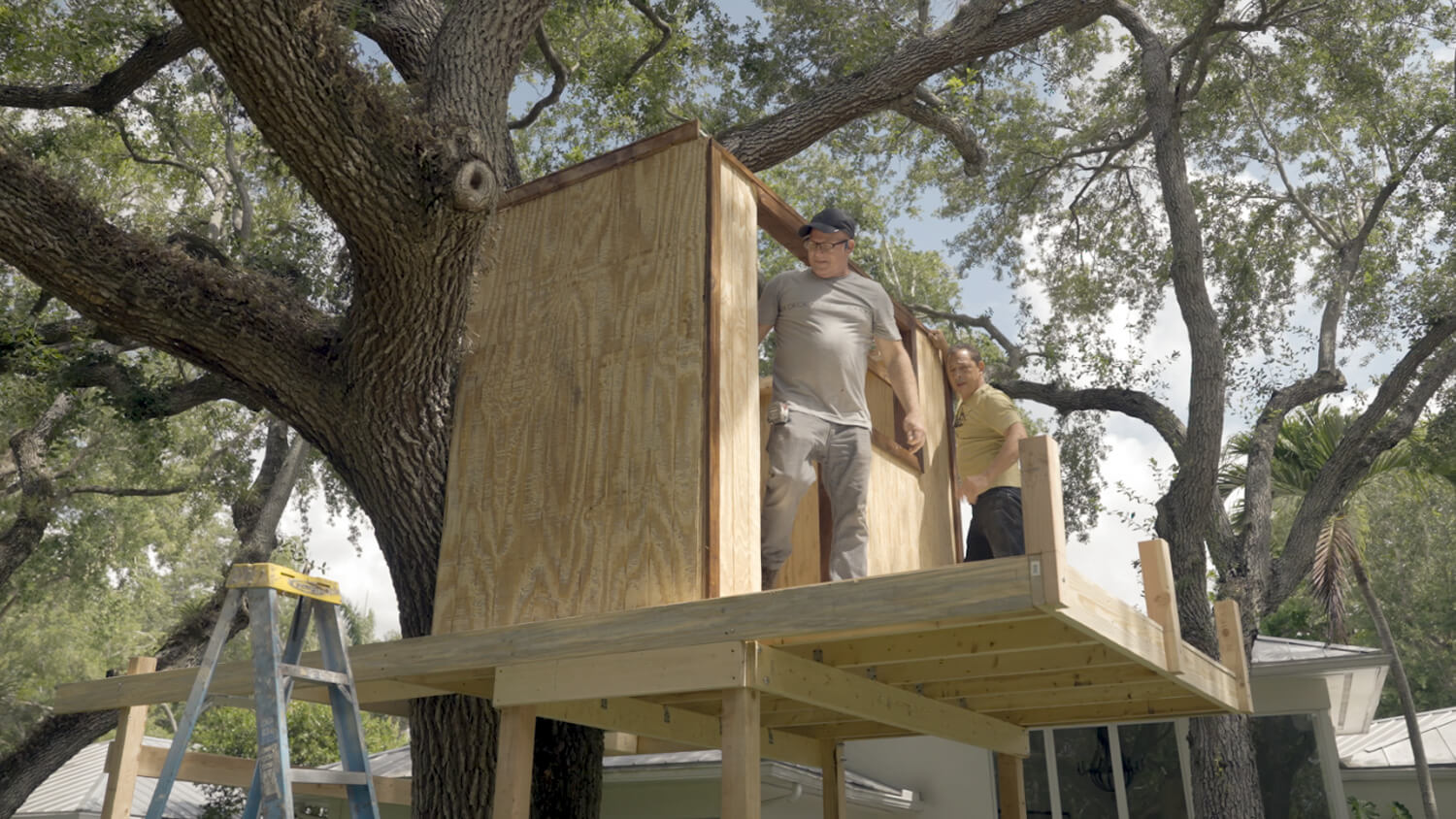
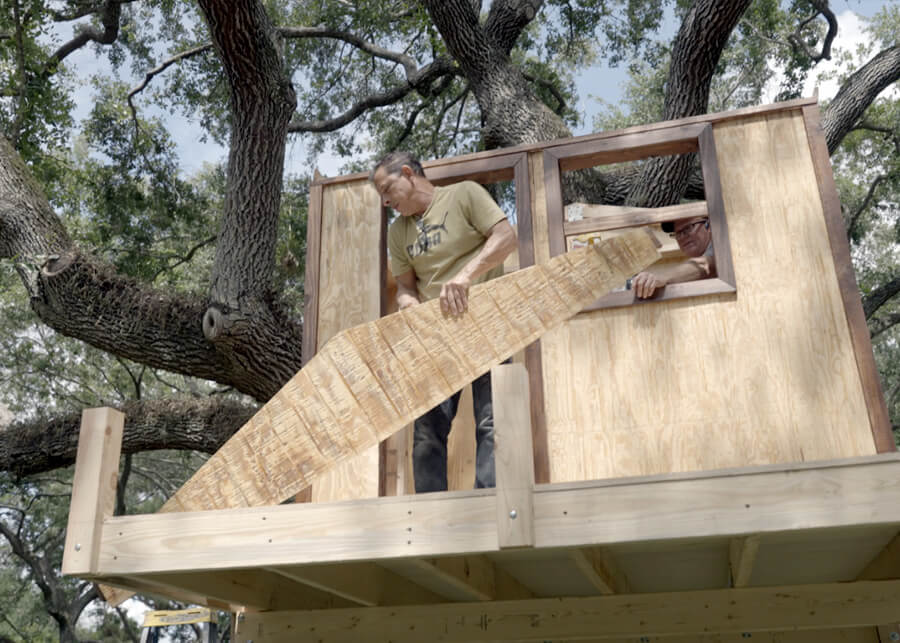
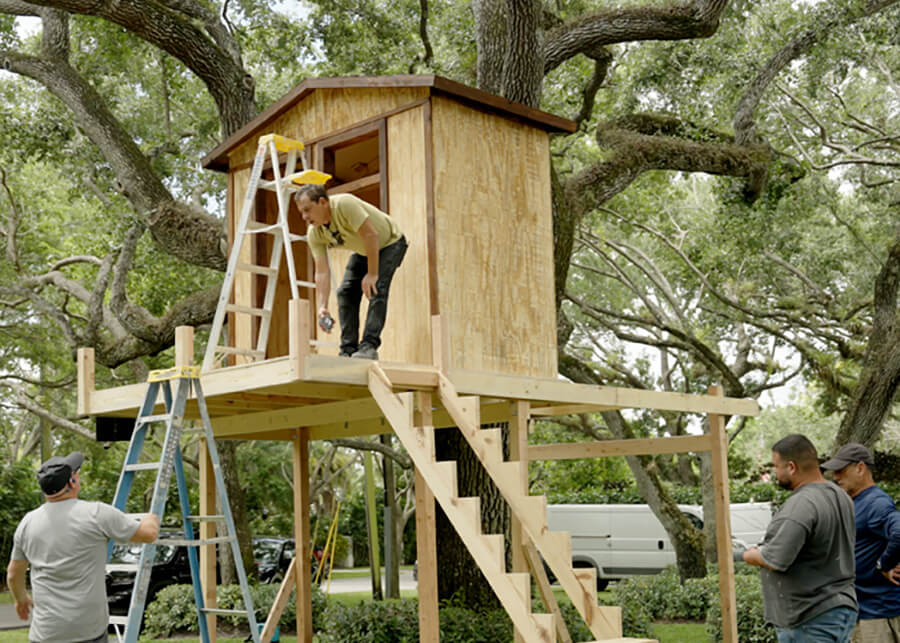
Neil approached Alexis Marin of Marin Set Builders with a specific constraint — the structure had to be fabricated entirely off-site, disassembled, transported to a private residence in a high-end neighborhood, and bolted together in a single morning, with no cutting, no sawdust, and no damage to the property.
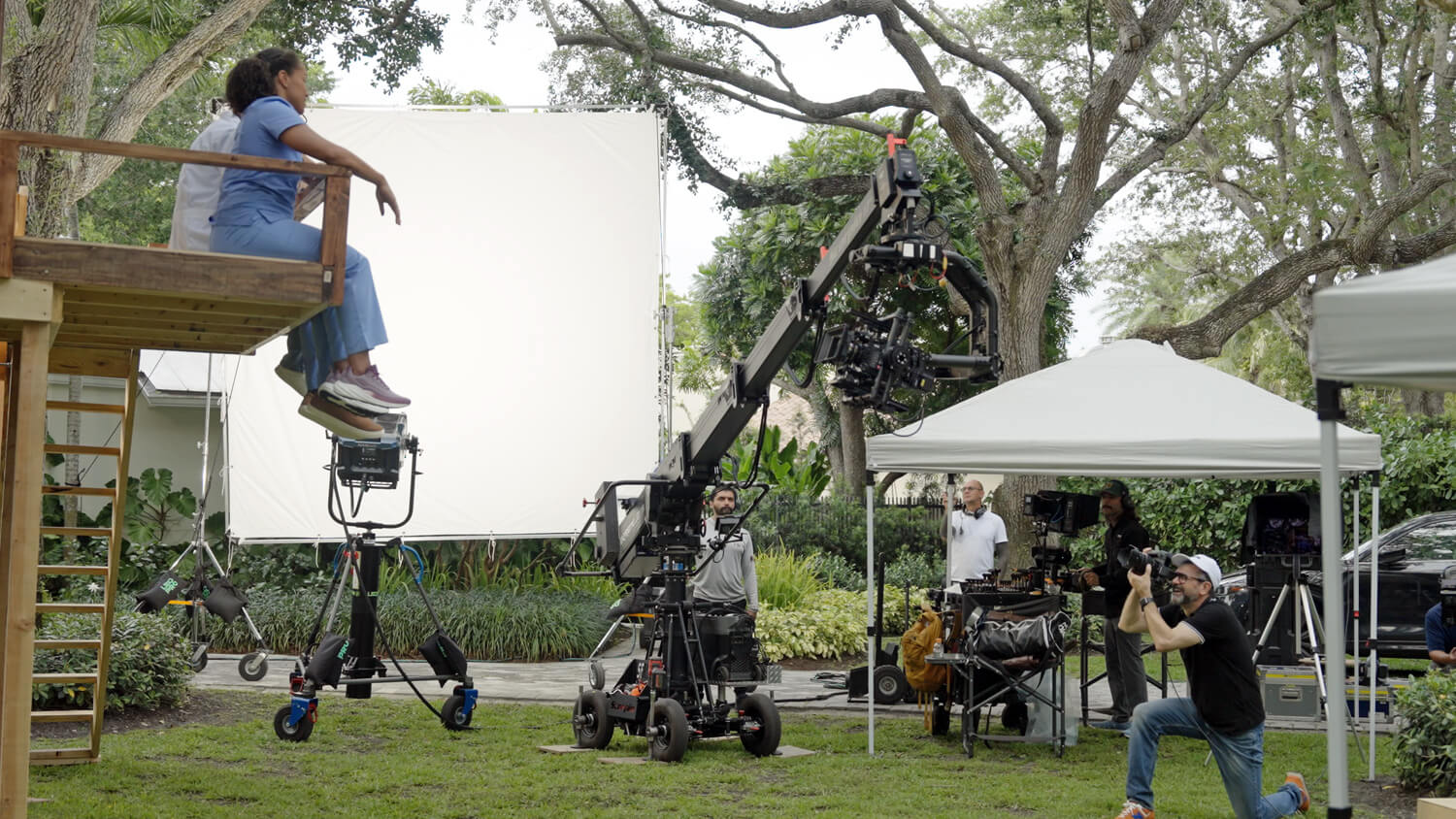
Marin went one step further. Rather than attaching the treehouse to the tree, he engineered the structure to stand independently on heavy columns — positioned so that, from the camera angle, the columns fall behind the tree trunk and disappear into the canopy. The platform's forward balcony extends well clear of the supports. On screen, it reads as a genuine treehouse growing out of the oak.
The homeowners saw the finished treehouse in their front yard and said: "If this were in our backyard, we'd keep it." It wasn't — but on camera, it could have been anywhere.
The backyard had no tree with the right scale. The front yard had mature live oaks with the canopy, character, and height to make the scene believable. Dense tree coverage in the front yard framed the shot so that no street, curb, or neighboring house was visible. It shot entirely as a private, wooded backyard.
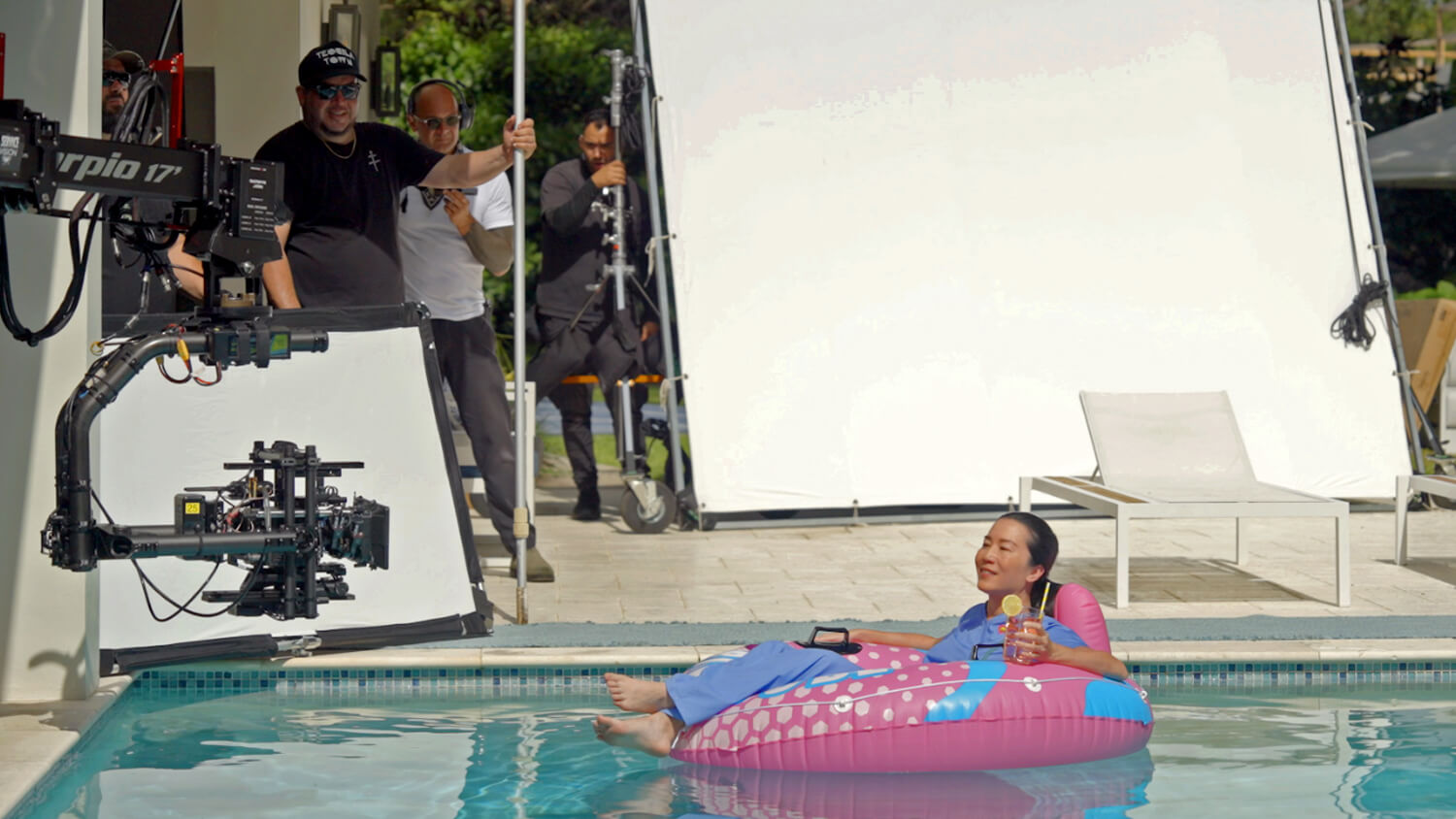
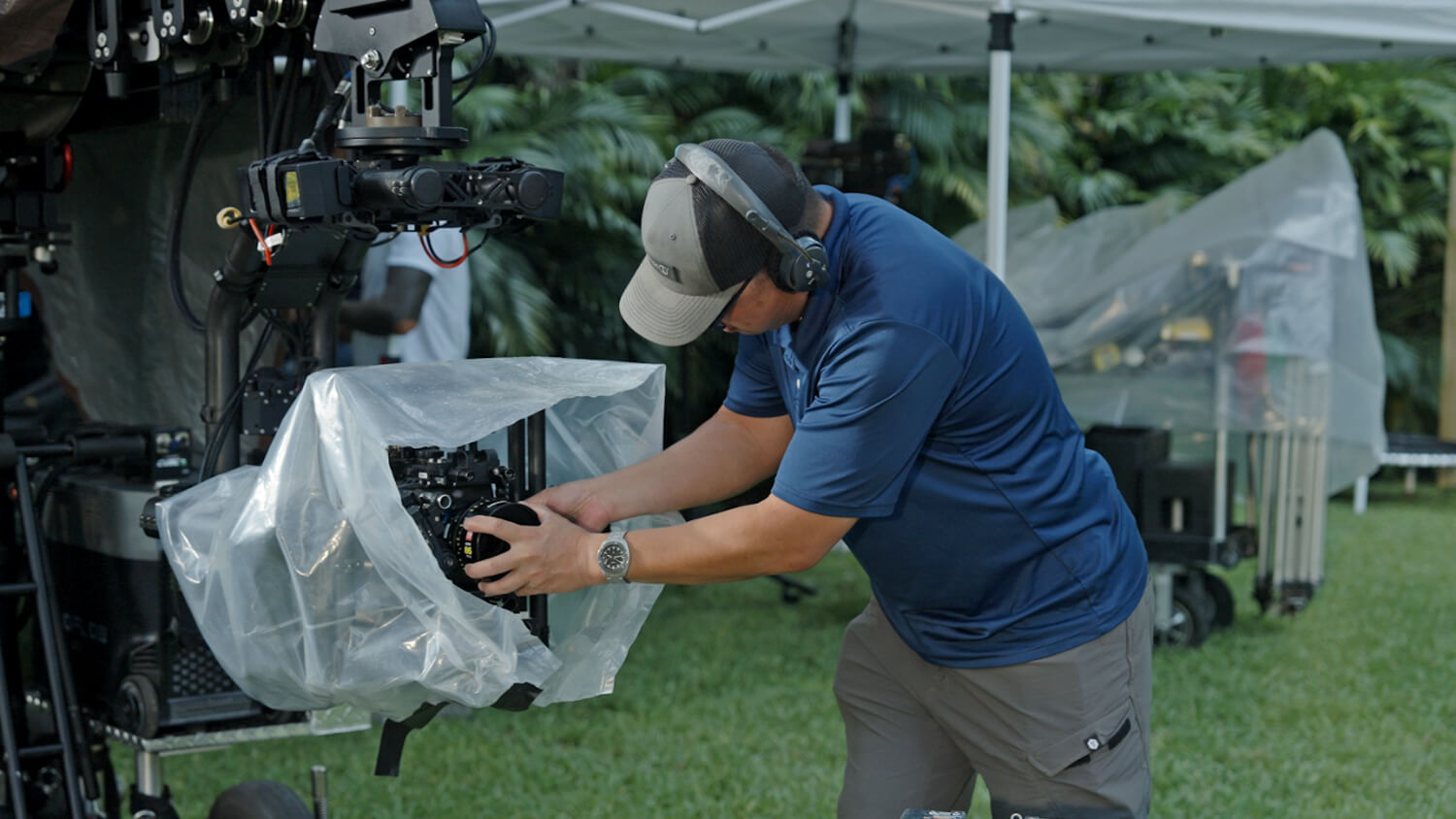
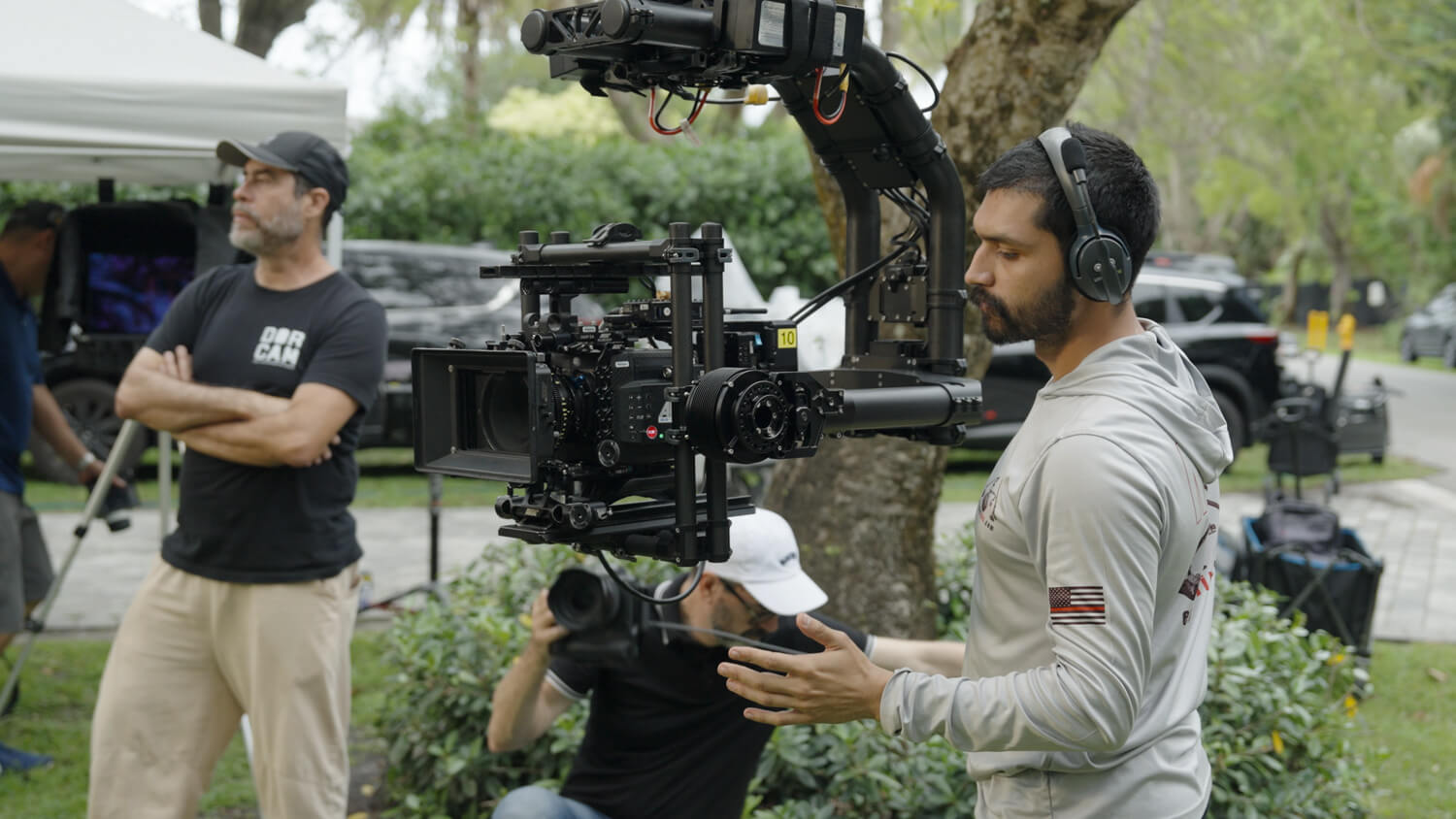
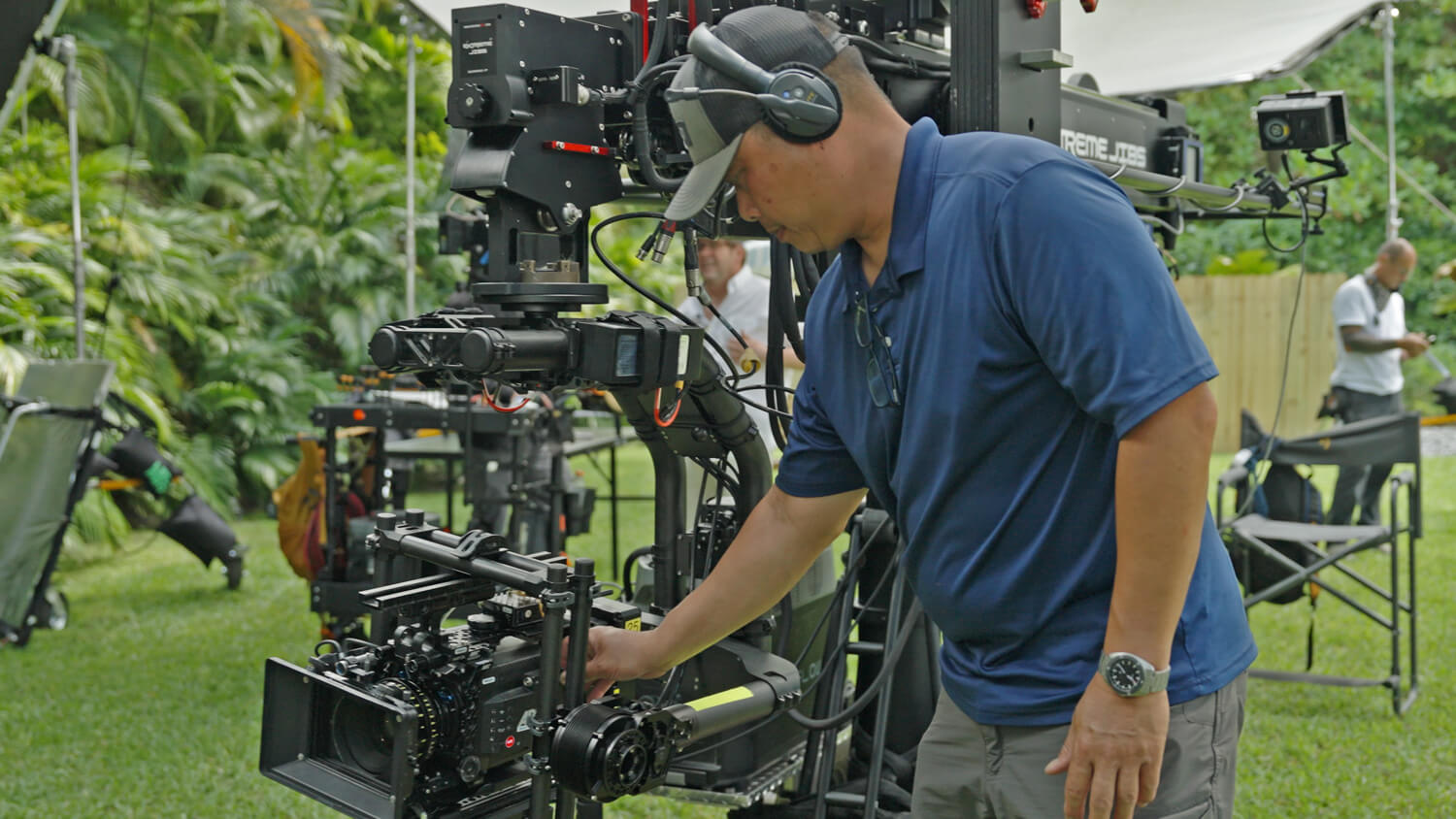
The decision to bring a Techno Crane to the shoot started with one scene. The treehouse platform sat approximately nine feet off the ground — high enough that a tripod was never a realistic option, and high enough that a standard jib without a telescoping arm would have produced a clumsy, mechanical move at a moment in the spot that called for something graceful. The Techno Crane's telescoping arm meant the camera could find the right position at any height, hold it cleanly, and move through it with control. That was the scene that justified putting the crane on the call sheet.
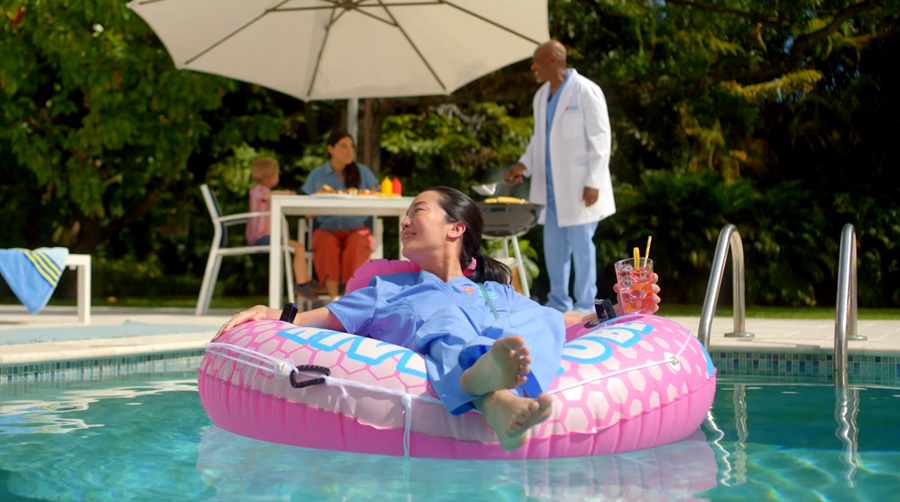
Then came the pool scene. The shot called for the camera to push slowly over the water and settle on the nurse floating in the pool — a move that requires putting the camera out over a surface you cannot stand on and cannot lay tracks across. The crane solved it without compromise. The arm extended over the edge of the pool, found the frame, and held it. On camera, the move reads as effortless.
Once the crane was on set, it became the primary camera movement tool for the entire day. That is where its real value showed. The telescoping arm meant the camera could move from a wide establishing shot to a tight close-up without the crew repositioning the crane — a push in, a pull out, a lateral drift, all controlled from the same footprint. On a one-day shoot with five scenes to complete, that kind of efficiency is not a luxury. It is what keeps the day on schedule.
The tradeoff is real estate. The Techno Crane has a larger footprint than a standard dolly, and that requires some planning around talent and crew positioning on set. But it eliminates the need for track — no laying rail, no leveling, no adjusting as the ground shifts — and it comes with a dedicated, experienced operator. Perhaps most practically: because the crane handles all camera movement, there is no need to pull a grip or electric crew member off their department to operate a dolly. Everyone on set stays on their job.
The result was a level of camera movement and production value that a one-day schedule with a single backyard location would not typically support.
Larger footprint than a standard dolly. Requires advance planning for talent and crew positioning — a manageable constraint on a well-prepped set.
The spot needed original music — and that required solving a tonal problem that was harder than it might appear. The campaign featured children and was centered on pediatric healthcare, but it was not a spot for or about kids. The audience was parents, families, and the general public. The tone had to feel warm and approachable without tipping into something too light or too whimsical for the subject matter. It also could not take itself too seriously, because the creative — doctors floating in pools, playing ping pong, building in tree houses — was inherently playful.
Finding that balance took collaboration. Neil worked with composer Rob Morales and Juan Carlos Alonso, the creative lead at AB&A, to develop a 30-second original music track that could carry the spot from open to close. The three of them worked through the competing pressures: enough energy to match the visual rhythm, enough warmth to fit the healthcare context, and enough whimsy to honor the backyard concept without undercutting the credibility of the brand.
The finished track serves the spot without calling attention to itself — which is exactly what the right music does.
Original 30-second composition
Rob Morales
Rob Morales, Neil Nunez, Juan Carlos Alonso (AB&A)
Whimsy + energy + warmth — for a spot that features kids without being for kids